
Cost & Planning
Water-Damaged Hardwood Floors in Clayton and Garner: Repair, Refinish or Replace?
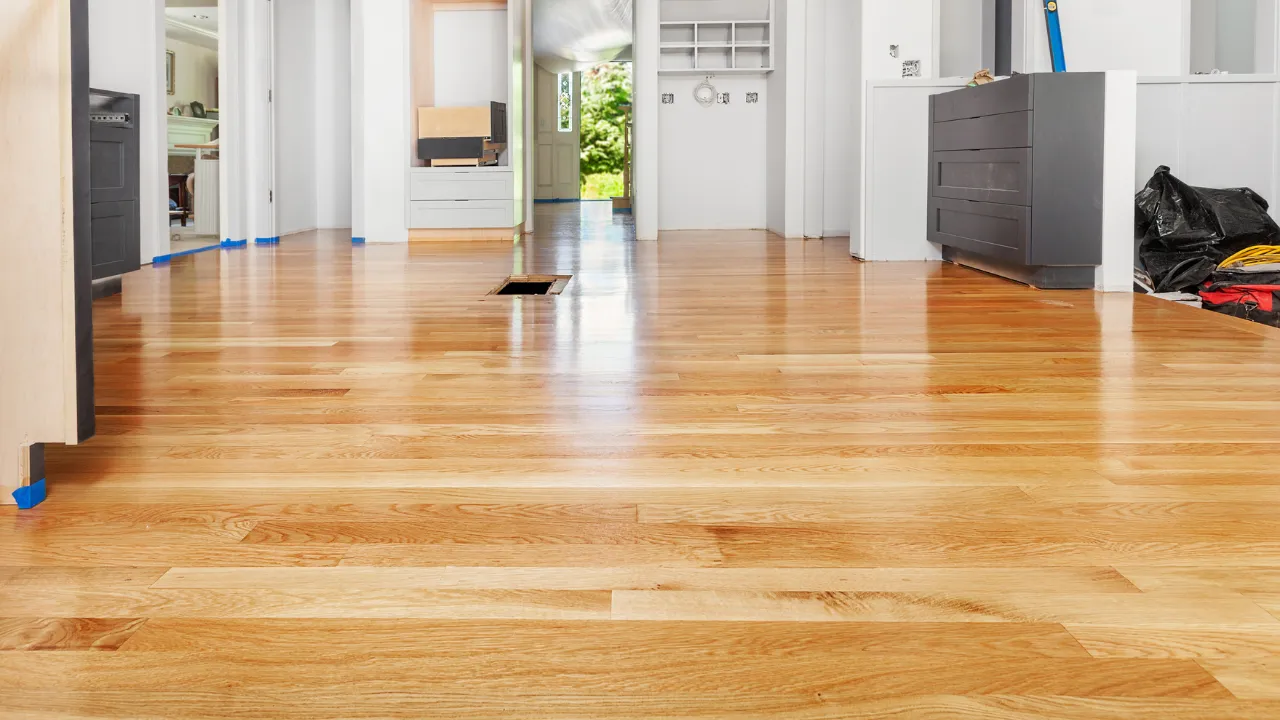
A dishwasher that leaked for a week, an ice maker line that split behind the fridge, a toilet seal that failed slowly, or a damp crawlspace through a long humid summer: water reaches hardwood floors in plenty of ways, and we see all of them in Clayton and Garner homes. The good news is that a water-damaged hardwood floor often does not need to be replaced. The bad news is that rushing the repair is the most common way to make it worse. This guide explains how to read the damage, why the floor has to dry before anything else happens, and how to tell a repair job from a replacement job.
Stop the water and find the source first
No repair lasts if the water keeps coming. Before anyone talks about boards or finish, the source has to be found and fixed. In kitchens it is usually the dishwasher supply or drain, the fridge water line or the sink. In bathrooms it is often a toilet wax ring or a shower pan. Under the whole floor, it can be the crawlspace.
Many homes in Garner's established neighborhoods and older Clayton houses sit on crawlspaces. A torn vapor barrier, blocked vents or a plumbing drip underneath can push moisture up into the floor for months without any water ever showing on the surface. If the cupping covers a whole room rather than one spot, look underneath before blaming the kitchen.
How to read the damage
Hardwood shows water damage in a few distinct ways, and each one points to a different cause and a different fix.
- ✓Cupping: the edges of each board sit higher than the middle. The boards have absorbed moisture from below. This is the most common sign and often the most recoverable.
- ✓Crowning: the middle of each board is higher than the edges. Usually this means a cupped floor was sanded flat before it had dried, and the boards shrank back once they did.
- ✓Buckling: boards lift right off the subfloor. This takes a lot of water or a long-running leak, and those boards usually need replacing.
- ✓Dark or black stains: water reacting with the tannins in oak, often around a pet bowl, plant or toilet. These stains go deep into the wood and rarely sand out.
- ✓Soft or spongy spots: the subfloor under the hardwood has been damaged. That section of subfloor has to be cut out and replaced as part of the repair.
Why drying comes before sanding
A cupped floor often flattens a good deal on its own once the moisture source is fixed and the room is dried out with fans, dehumidifiers and the air conditioning running. That can take a few weeks. We use a moisture meter to compare the damaged area with dry boards elsewhere in the house, and we do not sand until the readings match.
Sanding too early is the mistake that turns a repair into a replacement. If you sand a cupped floor flat while it is still wet, the raised edges are removed. When the boards dry and shrink back, the edges drop below the middle, and the floor crowns. At that point there is much less wood left to work with.
When a repair is enough
Most water damage we see in Clayton and Garner is local: a few square feet in front of the dishwasher or around a toilet. In those cases we cut out the damaged boards and weave in new boards of the same species and width, staggered into the existing pattern so there is no square patch.
With a site-finished solid hardwood floor, we then sand and refinish the whole room, or the whole connected area, so the new boards and the old ones take the same stain and finish. Refinishing only the patched area almost always leaves a visible difference in color and sheen. If the floor was due for refinishing anyway, this is a good time to change the stain color too. Our guide to refinishing or replacing hardwood covers that decision in more detail.
When replacement makes more sense
Some situations point toward replacing the floor in the affected area rather than repairing it.
- ✓A whole room has buckled or stayed cupped after it has fully dried.
- ✓Black stains cover a large area, so weaving in boards would mean replacing most of the floor anyway.
- ✓Engineered hardwood has been damaged. Its thin wear layer limits sanding, and water can make the layers separate. Damaged boards are usually replaced, which works well if the same product is still available.
- ✓Prefinished hardwood that has been discontinued. New boards from a different product will not match the factory finish exactly, so a larger area may need replacing to keep it consistent.
- ✓The floor has already been sanded many times, and there is not enough wood above the tongue to sand again.
Insurance and documentation
Homeowners policies often treat a sudden leak, such as a burst supply line, differently from slow damage over time, such as a seal that dripped for months or a humid crawlspace. Your policy decides what is covered, so call your agent early. Take photos before anything is removed, keep any failed parts, and note when you first noticed the damage.
We provide a written assessment of what we find, including moisture readings, the extent of the damage and an itemized repair quote. That is usually what an adjuster wants to see.
Hardwood floor repair in Clayton and Garner
Our Angier showroom is about 30 minutes from Clayton and 28 from Garner. At the visit we find the source if it is not already known, take moisture readings, check for soft spots and tell you honestly whether the floor can be repaired or should be replaced. You get a written quote either way.
APW has repaired and refinished hardwood across central North Carolina since 1973. Our own background-checked, trained installation professionals do the work, and every job carries our 100% product and labor guarantee. If you are replacing a damaged kitchen floor, our comparison of hardwood and luxury vinyl for NC humidity may help. See flooring repair in Clayton, flooring repair in Garner, hardwood refinishing in Clayton and hardwood flooring in Garner, or book a free estimate.
Ready To Plan Your Floors?
Get a free in-home or in-store consultation with our Angier team. We match the right product to every room and back it with a 100% satisfaction guarantee.
Get My Free Estimate