Buying Guide
LVP Flooring in Sanford, NC: Choosing Luxury Vinyl for Older and Newer Lee County Homes
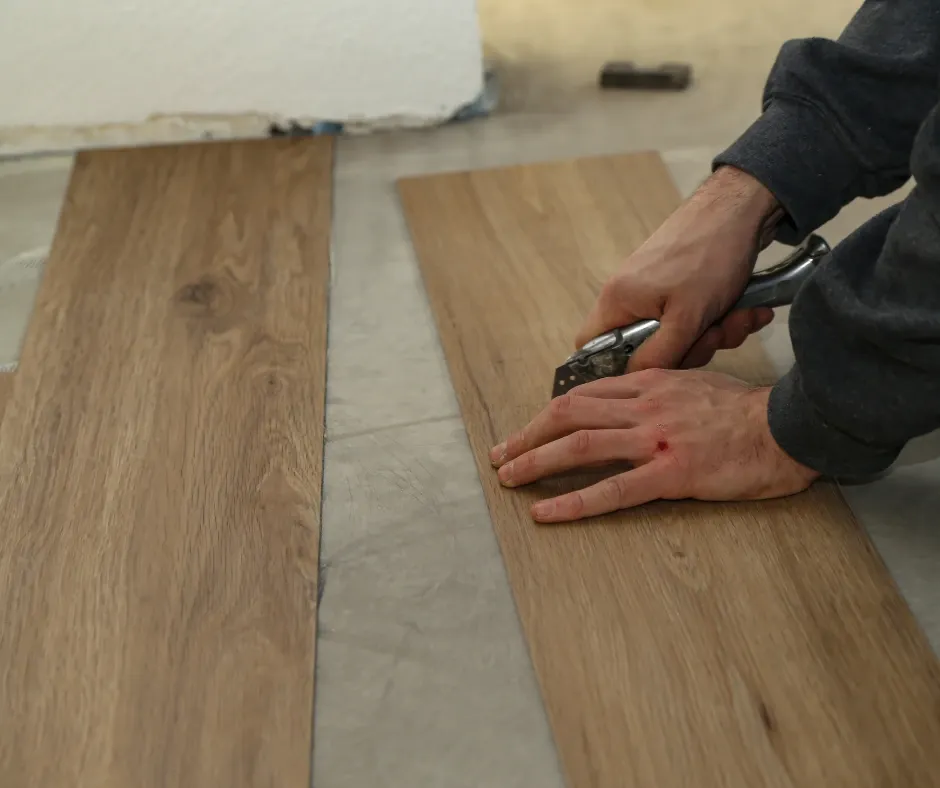
Luxury vinyl plank is the floor most Sanford homeowners ask us about, and it earns that. It is waterproof at the core, it handles kids and dogs, and it looks far more like wood than vinyl did twenty years ago. But Sanford is a town with two kinds of housing: older homes around downtown and the historic districts, and newer neighborhoods built as Lee County's industry has grown. The right LVP, and the right way to install it, is different in each. This guide covers what to look for on the box and what to check in the house before a single plank goes down.
The number that matters most: wear layer
Every luxury vinyl plank has a clear wear layer on top of the printed design. That layer is what stands between your floor and dog claws, chair legs and grit tracked in from the yard, and it is measured in mils (thousandths of an inch).
The plank's overall thickness, usually quoted in millimeters, is a different number, and it is the one sales displays tend to lead with. A thick plank with a thin wear layer will feel solid and still scratch early. Read the wear layer first.
- ✓6 to 8 mil: light-use rooms only, such as a guest bedroom or closet
- ✓12 mil: the standard for most homes and a sound choice for bedrooms, living rooms and hallways
- ✓20 mil and up: households with large dogs, busy kitchens and entries, and anyone who wants the floor to look new for longer
Rigid core or flexible: what suits your subfloor
Most LVP sold today is rigid core, either SPC (stone-plastic composite) or WPC (wood-plastic composite), and it floats over the subfloor with click-lock joints. A rigid plank bridges minor dips better than flexible vinyl and stays stable when the temperature changes. SPC is denser and more dent-resistant; WPC is a little softer and warmer underfoot. Our guide to SPC vs WPC luxury vinyl goes deeper.
Flexible, glue-down vinyl is thinner and follows every contour of the floor beneath it, so it needs a smoother base. It is the better choice where a floating floor would be a problem: very large open areas, rooms where heavy cabinetry or an island sits on the floor, and some commercial spaces.
Neither type fixes a floor that is out of flat. Manufacturers publish a flatness tolerance, commonly around 3/16 inch over 10 feet, and a floor outside it can leave joints that flex, click or separate. That is the main reason preparation shows up as its own line on a good quote.
Older Sanford homes: check what is underneath
Houses near downtown and in the older neighborhoods around McIver Park were often built with board subfloors over a crawlspace, and many have had two or three floors laid over each other since. Before choosing a product, we want to know what is under the current floor, because that decides most of the job.
Three things come up again and again in older Lee County homes.
- ✓Board subfloors and soft spots: individual 1x boards can cup, loosen or rot near old leaks. They usually need fastening down, repair or a new plywood underlayment before LVP.
- ✓Old vinyl and adhesives: sheet vinyl, 9x9 tiles and black mastic from before the 1980s can contain asbestos. Do not sand or scrape them until they have been tested. In many cases the safest answer is to leave them in place and install over them.
- ✓Hardwood hiding under carpet: original oak floors turn up under carpet more often than people expect. If yours is sound, refinishing it may be the better investment than covering it. Our post on whether to refinish or replace hardwood walks through that decision.
Newer Sanford homes: upgrading builder-grade floors
In newer subdivisions the subfloor is usually in good shape, and the question is what to replace. Builder-grade carpet and thin, early vinyl are the most common candidates, often in the same house.
The decision here is mostly about consistency. Running one LVP through the main level, kitchen and hallway removes transition strips and makes a modest house feel larger. Two practical limits apply: a floating floor needs an expansion gap at the walls and sometimes a break at doorways or across very long runs, and it should not be pinned down by a kitchen island or heavy built-ins. We plan both at the estimate, so they do not come as a surprise on installation day.
Crawlspaces, humidity and sun
Most of the rooms that go wrong with LVP in this area go wrong for reasons that have nothing to do with the plank.
Crawlspace moisture is the first. Waterproof planks do not swell, but a damp crawlspace still affects the subfloor beneath them, and mold or a musty smell is the usual sign. If the vapor barrier is torn or missing, fix that first. Our post on waterproof flooring explains why the label protects the plank, not the house.
Sun is the second. Vinyl expands with heat, and a sunroom or a wall of south- or west-facing glass can push a floating floor past its limits in a North Carolina summer. Some products are rated for this and some are not. Blinds or a glue-down product are the usual answers.
Choosing a look that holds up
Realism comes from a few details more than from color. Embossed-in-register texture, where the surface grain lines up with the printed grain, makes a plank read as wood up close. Longer and wider planks look more like real hardwood and show fewer seams. A painted or micro-beveled edge helps define each board.
For daily life, a matte or low-sheen finish in a mid-tone color hides dust, paw prints and fine scratches better than very dark or very light floors. Bring home samples and look at them in your own light at different times of day. That is the single best way to avoid regret.
LVP installation in Sanford
Sanford is about 30 minutes from our Angier showroom, where you can see luxury vinyl from Shaw, Mohawk, Armstrong and other brands side by side. If it is easier, we bring samples to your home instead. At the estimate we check the subfloor for flatness and soft spots, ask what is under the existing floor, and put preparation, removal and transitions in writing.
APW has installed floors across central North Carolina since 1973 with our own background-checked, trained installation professionals, and every job is backed by our 100% product and labor guarantee. See luxury vinyl plank in Sanford, waterproof flooring in Sanford and flooring installation in Sanford, or book a free estimate.
Ready To Plan Your Floors?
Get a free in-home or in-store consultation with our Angier team. We match the right product to every room and back it with a 100% satisfaction guarantee.
Get My Free Estimate