Buying Guide
Luxury Vinyl Plank and Waterproof Flooring in Raleigh: What to Check Before You Buy
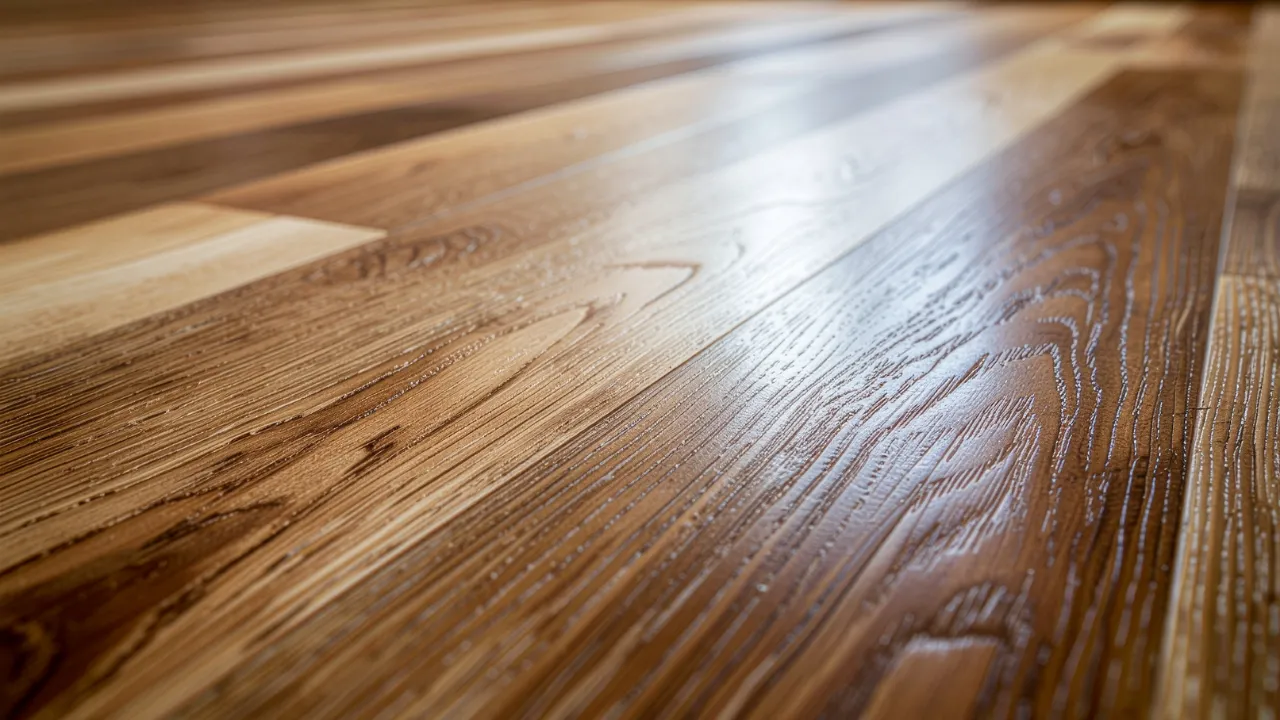
Luxury vinyl plank is the floor we are asked about most in Raleigh, and for good reason. It looks like wood, it shrugs off spills and dog bowls, and it goes down quickly over most subfloors. But the Raleigh housing stock is unusually mixed: older houses on crawlspaces inside the Beltline, townhomes and condos with HOA sound rules, and newer houses on concrete slabs across the south of the city. The same plank can be the right answer in one and a poor one in the next. This guide covers what we check before recommending LVP in a Raleigh home, and what the word waterproof really buys you.
Start with what the floor sits on
Before we talk about colors, we find out what is under the current floor, because it decides which LVP will work and how it goes down.
On a concrete slab, the question is moisture. Concrete wicks ground moisture upward, and a new slab can take months to dry. Vinyl itself does not mind, but trapped moisture under a floating floor can grow mold on the underside and some adhesives fail over a damp slab. We test the slab, and where readings call for it we specify a vapor barrier or a product with one attached.
Over a crawlspace, the question is the crawlspace. A damp crawlspace with a torn or missing vapor barrier affects any floor above it. LVP tolerates humidity far better than hardwood, but a soft or out-of-flat plywood subfloor telegraphs through a thin plank as dips and clicking joints.
Flatness matters in both cases. Most floating vinyl plank manufacturers require the subfloor to be flat within roughly 3/16 inch over 10 feet. High spots get ground down and low spots filled before the floor goes in; skipping that step is the most common reason click-lock joints separate.
Condos and townhomes: check the HOA first
If you live in a condo or a stacked townhome, read your association rules before you choose a floor. Many Raleigh HOAs require hard flooring on upper levels to meet a minimum sound rating, usually written as an IIC (impact insulation class) or STC number, and some require approval before work starts.
That is not a reason to avoid LVP. It means the underlayment is part of the specification, not an afterthought. A plank with a quality attached acoustic pad, or a separate rated underlayment under a rigid core, will normally meet the requirement. We ask for the HOA wording at the estimate and match the product and underlayment to it, so the paperwork is ready if the board asks.
What waterproof actually covers
Almost every LVP on the market is now sold as waterproof, and the claim is true about the plank. A good vinyl plank can sit in water without swelling, which is why it belongs in kitchens, bathrooms and laundry rooms where laminate and hardwood are a risk.
What the label does not promise is that water cannot get past the floor. A floating floor has seams and perimeter gaps. A dishwasher leak or an overflowing toilet can run through the joints and sit on the subfloor underneath, where it does its damage out of sight. Waterproof plank means the floor itself survives a spill; it does not make the room watertight.
Two practical consequences follow. First, clean up standing water promptly even on a waterproof floor. Second, in a laundry room or a bathroom, ask about sealing the perimeter with a flexible sealant and fitting a drain pan under the washer. Our post on what the waterproof label actually promises goes into the details, and waterproof flooring in Raleigh covers the service.
Rigid core or flexible: SPC, WPC and glue-down
Luxury vinyl comes in three broad constructions, and each suits a different Raleigh house.
SPC (stone-plastic composite) rigid core is dense and dimensionally stable. It handles the temperature swings of a sunroom or a room with big south-facing windows well and bridges small subfloor imperfections. It is firm underfoot.
WPC (wood-plastic composite) rigid core is thicker and softer, a little warmer and quieter, and often preferred in bedrooms and upstairs hallways. It dents more readily under point loads such as piano legs.
Glue-down vinyl is thin and fixed to the subfloor. It is the usual choice for large open areas, commercial spaces and rooms with heavy rolling loads, because it cannot shift or separate. It needs a very flat, clean subfloor.
Our comparison of SPC vs WPC luxury vinyl goes deeper into which core suits which room.
Wear layer, pets and the specs that matter
The printed wood image on LVP is protected by a clear wear layer, measured in mils. It is the single best indicator of how long a plank will look new, and it is often missing from the big number on the box.
For pet owners, which covers a lot of Raleigh, the plank is only half the story. Vinyl resists urine and water well, but accidents that find a seam can reach the subfloor, so prompt cleanup matters. Large dogs will scuff any floor; a thicker wear layer and a textured, matte surface hide the marks far better than a smooth, glossy one. Our guide to pet-friendly flooring compares LVP with the alternatives, and premium LVP explains what the higher price tiers actually buy.
- ✓Wear layer: around 12 mil suits bedrooms and light-traffic rooms; 20 mil or more is worth it for kitchens, main living areas and homes with large dogs
- ✓Total thickness: thicker planks feel more solid, but the wear layer matters more for durability
- ✓Attached underlayment: convenient, and important upstairs and in condos; do not double up with a second pad unless the manufacturer allows it
- ✓Surface texture: embossed-in-register and matte finishes hide scratches and look more like real wood
- ✓Plank length and width: longer, wider planks read as more upscale in open-plan rooms
Open plans, transitions and long runs
Raleigh's newer houses often have a main level that runs from the front door through the kitchen to the back wall without a break. Running one LVP through the whole space looks best, but floating floors expand and contract, and many manufacturers limit how far a single floor can run before it needs an expansion break, often somewhere around 40 to 50 feet depending on the product.
We plan those breaks at doorways and natural divisions where a transition strip looks intentional, rather than across the middle of the living room. Where a client wants no transition at all over a very long run, a glue-down product is usually the answer.
The same planning applies where LVP meets tile, carpet or an existing hardwood floor. Each finishes at a different height, and deciding in advance where those meetings fall is the difference between a floor that looks designed and one that looks patched.
LVP or laminate in Raleigh?
Newer water-resistant laminates have narrowed the gap, and laminate is harder and more scratch-resistant on the surface. For kitchens, bathrooms and slab-on-grade houses, we still lean toward LVP because the core is unaffected by water. For bedrooms and living rooms in a house over a dry crawlspace, laminate is a sound choice. LVP vs laminate sets the two side by side, and laminate flooring in Raleigh covers that option locally.
Getting an estimate in Raleigh
Our Angier showroom is about 35 minutes south of downtown Raleigh, and we bring samples to your home so you see them against your own cabinets, walls and light. We measure every room, test a slab or check the crawlspace, look at the subfloor and ask about the HOA if there is one, then put together a written quote.
APW has installed floors across central North Carolina since 1973, carrying Mohawk, Shaw, Armstrong and other major lines, and our own background-checked, trained installation professionals do the work. Every job carries our 100% product and labor guarantee. See luxury vinyl plank in Raleigh and the Raleigh service area page, or book a free estimate.
Ready To Plan Your Floors?
Get a free in-home or in-store consultation with our Angier team. We match the right product to every room and back it with a 100% satisfaction guarantee.
Get My Free Estimate