
Cost & Planning
Replacing Carpet With Hardwood in Garner and Clayton: Stairs, Tie-Ins and Transitions
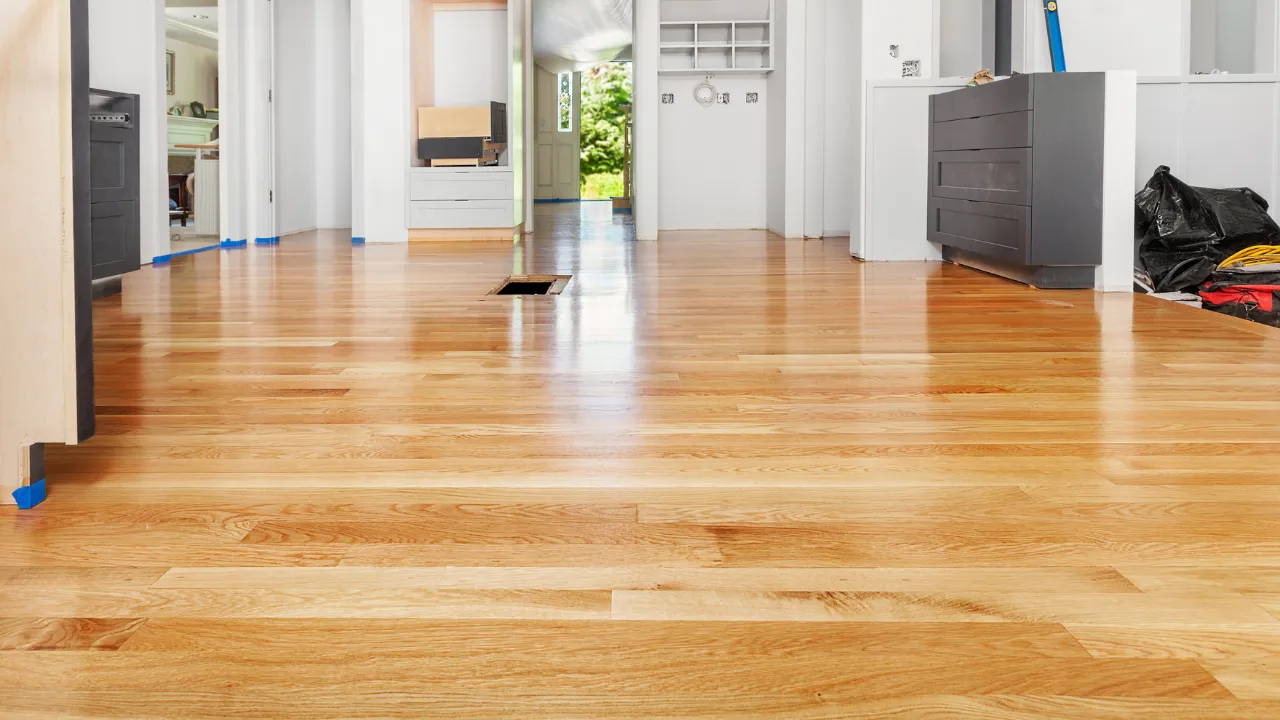
A lot of the hardwood work we do in Garner and Clayton starts the same way. The house has hardwood or vinyl in the foyer and kitchen, carpet in the living room, the bedrooms and up the stairs, and the owners want wood through the main living areas, or through the whole house. Choosing the species and color is the enjoyable part. What decides whether the finished floor looks like it was always there is everything around it: what is under the carpet, how the new floor meets the old one, what happens at the stairs, and how every doorway and baseboard is finished. This guide walks through those decisions in the order you will meet them.
What is under the carpet
Once the carpet, pad and tack strip come up, the subfloor is what the new floor depends on. In most houses in Garner and Clayton that is plywood or OSB sheathing over floor joists on a crawlspace, or a concrete slab. The tack strip nails and pad staples are pulled, and the subfloor is checked for soft spots, old pet or water stains, and seams that have lifted.
Squeaks are worth fixing now. Carpet hides a squeaky subfloor; hardwood nailed over it will not. Loose sheathing is screwed down to the joists before any wood goes down, and a soft or water-damaged section is cut out and replaced. Our guide to subfloor repair and soft spots covers what that involves.
Crawlspace or slab decides the product
Over a wood subfloor on a dry crawlspace, both solid hardwood and engineered hardwood can be nailed down, and solid is the traditional choice. Over a concrete slab, solid hardwood is generally not recommended; engineered hardwood is glued down or floated instead, after the slab is tested for moisture. If the crawlspace is damp, that has to be dealt with first, because a wood floor over a wet crawlspace will cup.
We go into the trade-offs in solid vs engineered hardwood. For a carpet replacement, the point is simply that the house decides the product before you choose a color, so it is worth knowing which you have before you shop.
Tying into hardwood you already have
If there is already hardwood in the foyer or dining room, you have two choices: blend the new floor into it, or stop it at a doorway with a threshold and let the rooms be different.
Blending works best when the existing floor is site-finished oak, sanded and finished in place, which is common in older houses. New unfinished boards of the same species and width are woven into the old floor, so the joint is staggered rather than a straight line, and then the old and new floors are sanded and finished together. Done that way, the color and sheen match across the whole area, and you get to choose a new stain at the same time. Our guide to changing your hardwood color shows what is possible.
Prefinished builder hardwood is harder to match. The exact product is often discontinued, and a near match laid next to it can look wrong in daylight. The options are to find the closest product and break at a doorway, or to replace the existing section along with the carpet so the whole area is one floor. We bring samples to the house so you can compare them against what is there.
Stairs are their own project
Stairs in houses built for carpet usually have treads made of OSB or particleboard with a rounded nose, which were never meant to be seen. You cannot simply sand and stain them. The common options are below, and each step is quoted on its own because a flight of stairs takes far more time than its square footage suggests.
- ✓Retrofit hardwood treads and risers: the overhanging nose of each existing tread is cut back, and new hardwood treads and riser boards are fitted over the old structure. This gives the look of a hardwood staircase without rebuilding it, and the treads can be stained to match the floor.
- ✓Hardwood treads with painted risers: the same method, with white or painted risers. It is a popular look, it is a little less expensive, and it hides scuffs less well than wood risers.
- ✓Keep carpet on the stairs: a perfectly good choice, especially with children or older dogs, because carpet is quieter and less slippery. A new carpet, or a runner over new wood treads, can be finished to look intentional where it meets the hardwood landing.
- ✓Railings and balusters: these are usually left in place, but the newel post and skirt boards may need trimming or new trim where the new treads meet them. Ask how this is handled before you sign.
Doorways, baseboards and floor heights
Three-quarter-inch solid hardwood sits at roughly the same height as the carpet and pad it replaces, so doors usually still swing freely. Where the new hardwood meets tile, vinyl or carpet that is staying, the heights rarely match exactly, and each doorway needs a transition: a T-molding where the floors are close to level, a reducer where the hardwood is higher, or a threshold at an exterior door. Planning these before installation means each one is placed under a closed door rather than in the middle of a walkway.
Baseboards in carpeted rooms are often set slightly above the subfloor, because the carpet tucks underneath them. With hardwood, that gap is covered with shoe molding or quarter round, or the baseboards are removed and reset so they sit on the new floor. Removing and resetting looks cleaner and needs a little paint touch-up afterward; adding shoe molding is quicker and less expensive. Door casings are undercut so the hardwood slides beneath them rather than being scribed around them.
Which rooms to change, and what a quote should show
Many owners change the main living areas and the stairs and keep carpet in the bedrooms, which keeps the cost down and the upstairs quieter. Others do the whole house at once so there is one floor and one set of transitions. Either works; the important thing is to decide where the floor changes so it happens at a doorway rather than across an open room.
A clear quote lists the hardwood by species, width and construction; carpet removal and disposal; subfloor repair and screwing down; the tie-in or threshold at existing floors; stairs, step by step; transitions; baseboard and shoe molding; and finishing, if the floor is site-finished. If a number arrives without those lines, ask what is included.
- ✓Prefinished hardwood: the floor is ready to use as soon as it is installed, with little dust.
- ✓Site-finished hardwood: sanding and several coats of finish add a few days, and you stay off the floor while it cures, but it is the way to blend with an existing floor.
- ✓Furniture: plan where it goes while the rooms are done; we discuss what we move and what you move at the estimate.
Hardwood in Garner and Clayton
Our Angier showroom is about 28 minutes from Garner and 30 from Clayton, and we bring samples to your home so you can see them next to your existing floor, stairs and cabinets. At the free estimate we pull back a corner of carpet where we can, check the subfloor or crawlspace, look at the stairs and give you a written quote with each part listed separately.
APW has been family-owned in Angier since 1973. Our installation professionals are background-checked and trained, every job carries our 100% product and labor guarantee, and 0% financing (same as cash) is available. See hardwood flooring in Garner, hardwood flooring in Clayton, flooring installation in Garner and hardwood refinishing in Garner, or book a free estimate.
Ready To Plan Your Floors?
Get a free in-home or in-store consultation with our Angier team. We match the right product to every room and back it with a 100% satisfaction guarantee.
Get My Free Estimate